Telescopic boom lifts, often termed straight booms or stick booms, serve trades requiring maximum horizontal extension across structural obstacles rather than multi-jointed articulation. When staging structural framing…
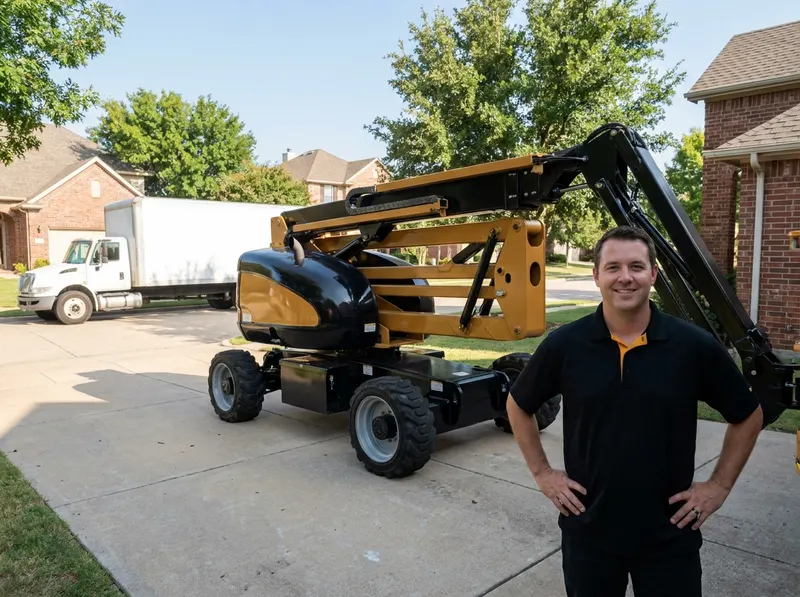
Telescopic boom lifts, often termed straight booms or stick booms, serve trades requiring maximum horizontal extension across structural obstacles rather than multi-jointed articulation. When staging structural framing along highway corridors in Alliance or installing architectural steel near the Cultural District, a telescopic unit pushes personnel straight out over structural footings where ground-level access is blocked. If an exterior build requires straight-line projection over deep trenches or pipe racks, a telescopic boom is the correct selection; if the job demands maneuvering up-and-over a parapet or navigating tight alleys behind commercial facades in the Camp Bowie District, an articulating boom lift is the proper machine. The trade-off is maneuverability versus outright horizontal reach: straight booms require a larger swing radius and wider ground footprint, but they eliminate the platform sway inherent in multi-knuckle designs.
Site setup demands precise ground assessment across Tarrant County. A standard 60-foot telescopic boom weighs approximately 21,500 pounds, exerting significant point-load pressure through its solid rough-terrain tires. Staging along sloping subgrades near Clearfork or older street parking in the Fairmount Historic District requires heavy-duty outrigger pads or timber cribbing to prevent concrete fracture or asphalt displacement. Furthermore, units operating in windy river corridors near the Panther Island Pavilion must adhere to factory wind-speed cutoffs, which prohibit platform elevation in sustained winds exceeding 28 miles per hour. Contractors should always plan staging layouts around overhead utility clearances, maintaining an enforced 10-foot minimum boundary away from active electrical conductors.
Delivery routing accounts for regional infrastructure constraints. Mobilizing an 85-foot straight boom onto residential job sites near TCU-Westcliff or tight access lanes in Alamo Heights, Riverside, and Marine Creek Ranch requires clear semi-truck and lowboy trailer turning room. Step 1: verify gate width and overhead tree canopy height prior to scheduling drop-off. Step 2: mark designated stable, compacted ground for flat-bed unloading. Step 3: conduct the daily ground and basket control walk-around inspection alongside the delivery driver. Step 4: refuel diesel engines before final pickup to avoid supplementary yard refueling fees.
Every job gets a firm, written price after a free on-site visit.
Tell us about your telescopic boom lift rentals job in Fort Worth and we'll send a clear, written quote, usually the same day.
 First Coast Dumpster Rental