Excavation projects throughout Tarrant County require precise protective systems to comply with federal safety regulations and manage local ground conditions. Trench safety shoring is mandatory under OSHA standard 1926…
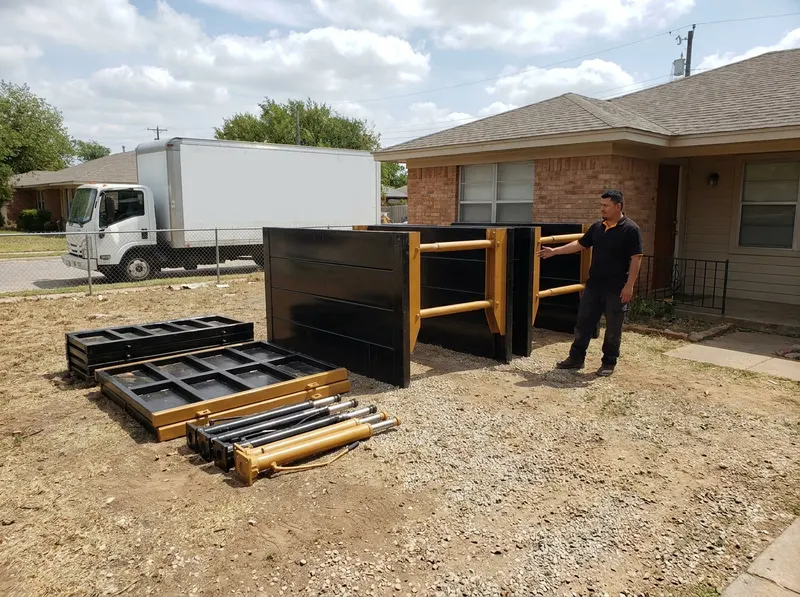
Excavation projects throughout Tarrant County require precise protective systems to comply with federal safety regulations and manage local ground conditions. Trench safety shoring is mandatory under OSHA standard 1926 Subpart P on any excavation reaching a depth of 5 feet or greater. In areas like Fairmount Historic District and Riverside, contractors encounter dense, unconfined clay alongside unstable backfill from century-old infrastructure. Hydraulic vertical shores fit these narrow, shallow repair cuts by using pressurized fluid to exert continuous horizontal force against trench walls, stabilizing the cut without requiring wide mechanical excavators. The operational trade-off centers on working room versus wall containment: hydraulic cylinders cross the center of the trench line every 4 to 8 feet, which leaves less open space for maneuvering large-diameter culverts but allows rapid placement from surface level.
For deep sewer mains, stormwater vaults, and highway infrastructure along Interstate 35W in Alliance or commercial utility runs near Clearfork, heavy double-wall steel trench shields are the correct selection. These boxes rely on fixed pipe spreaders measuring 4 to 10 feet wide, creating an open safety envelope that shields crews against lateral cave-ins while leaving the trench floor unobstructed for bedding gravel and mechanical pipe pullers. Steel shields require a tracked excavator with adequate lifting capacity to lift and pull boxes through the cut, whereas modular aluminum trench boxes can be assembled by a two-man crew and handled with a standard rubber-tired backhoe in congested residential easements near TCU-Westcliff and Stop Six.
Ground movement risks increase dramatically in the Marine Creek Ranch and Camp Bowie District corridors due to high water tables and fissured soil profiles classified as Type C. Using an undersized shield or neglecting spreader pin load capacities leads to catastrophic shield binding or structural buckling under wet soil pressure. Spec-sheet clarity matters: each shield rental includes stamped professional engineer data sheets indicating allowable depth ratings from 12 to 32 feet based on soil lateral pressure. Deliveries originate locally within Tarrant County, ensuring direct transport access to the Cultural District and Alamo Heights without broker markups or unpredictable third-party transit delays.
Every job gets a firm, written price after a free on-site visit.
Tell us about your trench safety shoring rentals job in Fort Worth and we'll send a clear, written quote, usually the same day.
 First Coast Dumpster Rental